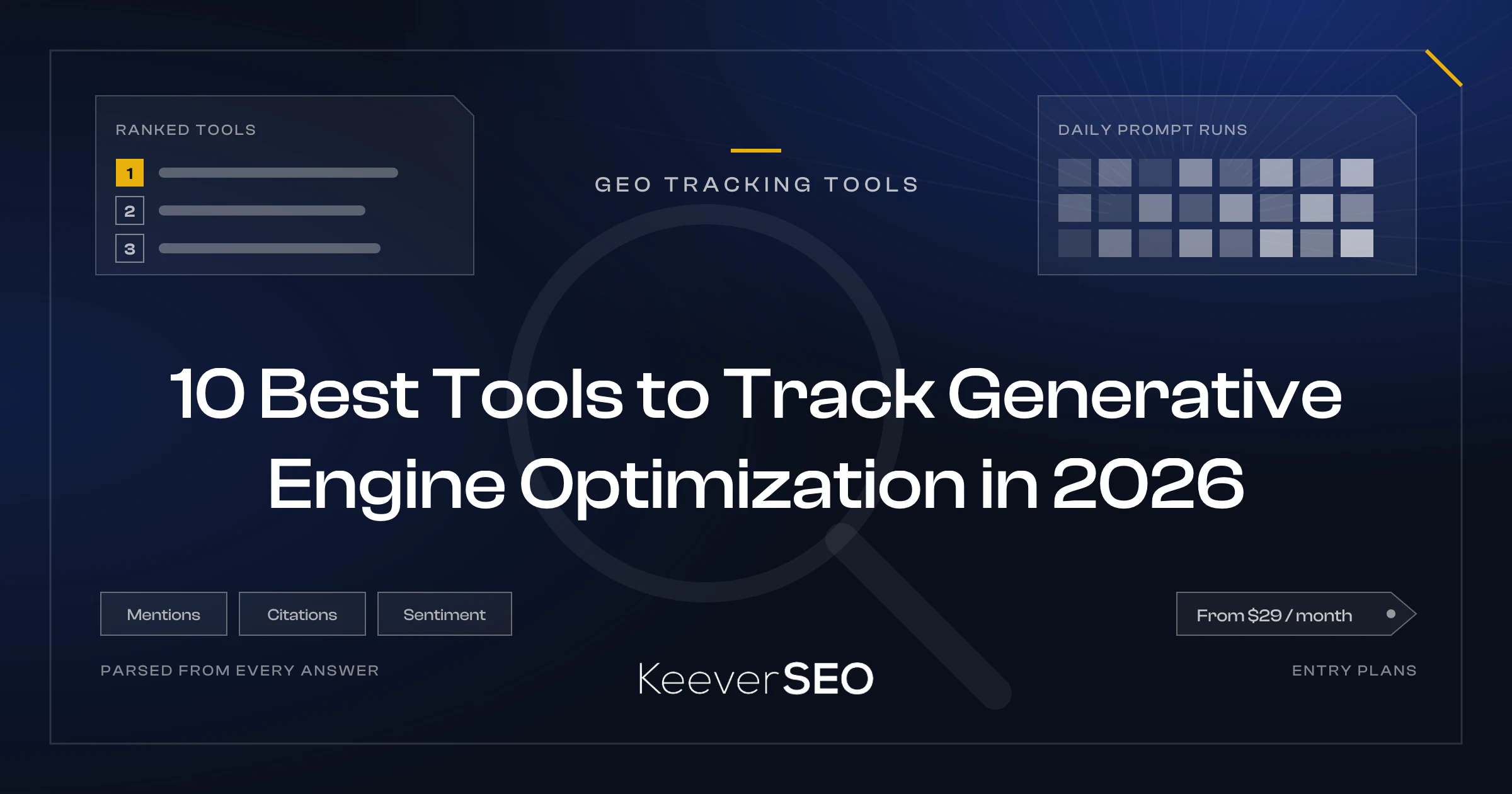
The best tools to track generative engine optimization in 2026 are Profound, LLM Pulse, Peec AI, Scrunch AI, Otterly.ai, LLMrefs, Ahrefs Brand Radar, Semrush AI Toolkit, AthenaHQ, and Google Analytics 4. A GEO tracking tool runs buyer prompts across AI models and records brand mentions, citations, sentiment, and AI referrals. Ranked by their primary tracking strengths, the ten tools are listed below:
- Profound: enterprise citation analytics.
- LLM Pulse: citation tracking across five AI models.
- Peec AI: multilingual prompt tracking.
- Scrunch AI: visibility tracking with content suggestions.
- Otterly.ai: affordable AI Overview and chatbot citation monitoring.
- LLMrefs: keyword-to-prompt research and citation sources.
- Ahrefs Brand Radar: large-scale mention data and competitor share of voice.
- Semrush AI Toolkit: AI visibility tracking within Semrush.
- AthenaHQ: visibility tracking with content recommendations.
- Google Analytics 4: free AI referral measurement.
The rankings consider AI model coverage, tracking depth, citation and sentiment data, reporting, workflow usefulness, and price. A strong GEO tracker covers the AI platforms customers use, runs prompts on a fixed schedule, and reports citations and sentiment alongside mentions. GEO tracking tools schedule prompts, parse generated answers for brand mentions and cited URLs, then report visibility trends, while SEO tools focus on keywords and search-result positions, and AI answers vary between runs. Free tiers and manual prompt checks suit small websites, but paid platforms better support multi-model trend tracking. Published entry plans start at $29 per month, mid-market plans run from about $150 to $500 per month, and enterprise platforms use custom pricing. Common mistakes include tracking too few prompts, treating one response as conclusive, ignoring cited sources, and collecting data without improving content.
A local service business can start with an affordable tracker and Google Analytics 4, choosing prompt volume based on its budget and number of services. A managed GEO service suits businesses that need people to act on visibility data through content updates, schema improvements, technical changes, and third-party mentions, because tracking software reports visibility but does not complete that work. Teams should report mention rate, citation share, brand prominence, sentiment, and AI referral conversions, while checking whether an AEO platform covers the required models, prompt frequency, citations, local results, exports, and conversion data. GEO best practices use tracking results to identify cited pages, improve crawlability and content structure, answer relevant audience questions, and measure whether changes increase citations. Profound leads the ranked list for enterprise teams that need detailed citation analytics and centralized reporting.
1. Profound — Best Enterprise Platform for Deep Citation Analytics
Profound is the best enterprise platform for detailed citation analytics, tracking brand mentions, citations, sentiment, and share of voice across AI answer engines. Its Prompt Volumes feature estimates demand for questions people ask AI, which helps large brands and agencies prioritize topics and measure competitors.
Profound suits teams that need customized prompt tracking, multi-brand monitoring, and executive reporting. Profound's pricing page offers a free trial of "50 prompts run daily for 7 days" and a custom Enterprise plan tracking "up to 9 Answer Engines," with no self-serve paid price published, which can make the platform costly and complex for smaller teams.
2. LLM Pulse — Best for Citation Tracking Across Five AI Models
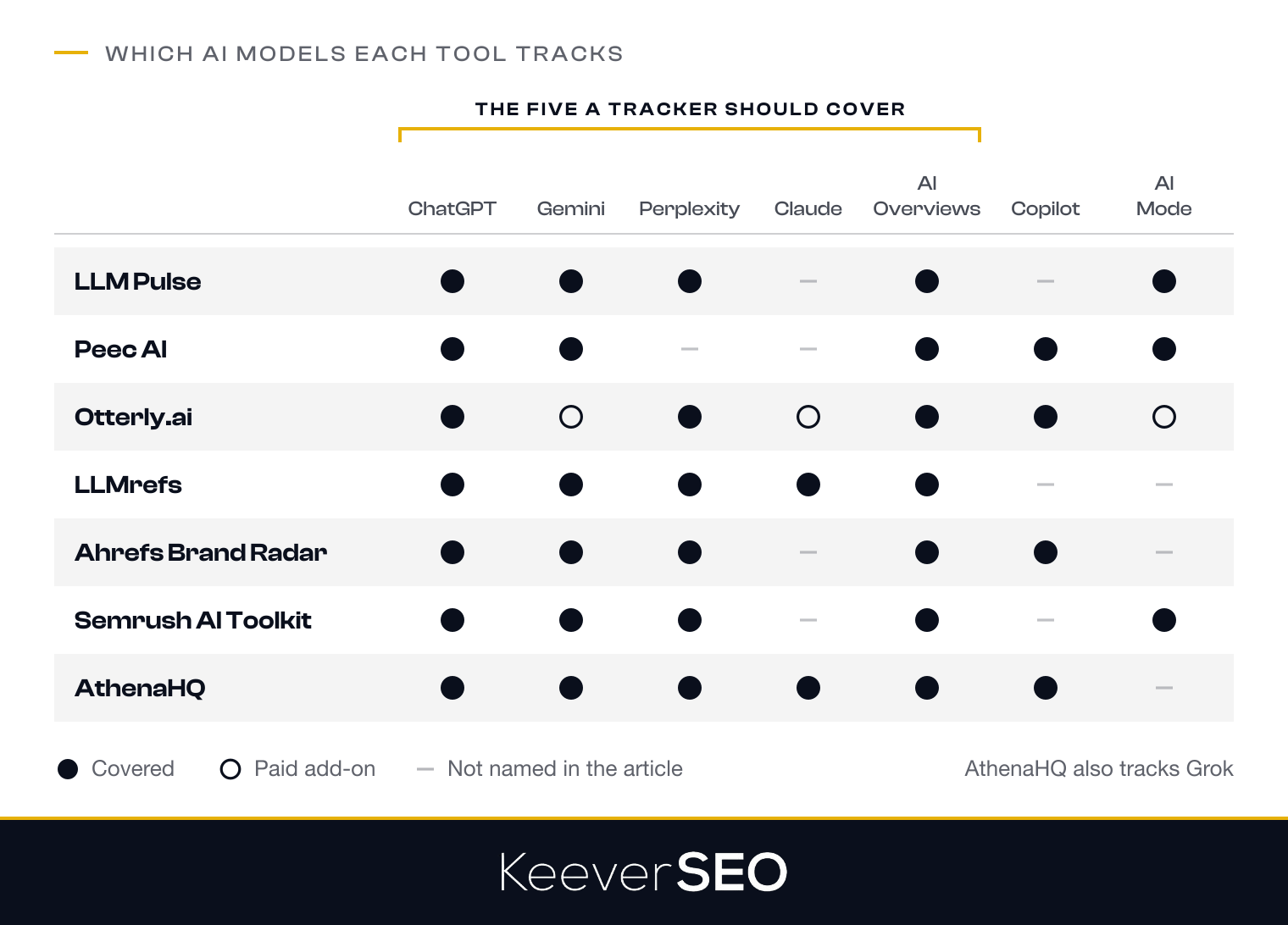
LLM Pulse is the best tool for citation tracking across five AI models, recording brand mentions, citations, positions, sentiment, and visibility across ChatGPT, Perplexity, Gemini, Google AI Overviews, and Google AI Mode. The platform compares brand results with competitors using shared prompts, which helps teams measure share of voice and identify the sources behind AI recommendations.
LLM Pulse suits in-house marketing teams, SaaS companies, and agencies that need recurring multi-model reports. Check each plan's refresh frequency and model coverage before buying, since engines outside the core five may require a higher tier.
3. Peec AI — Best for Multilingual Prompt Tracking
Peec AI is the best tool for multilingual prompt tracking, monitoring brand visibility across AI search platforms, languages, and countries. The platform records mentions, citations, sentiment, position, and competitor visibility across supported systems such as ChatGPT, Gemini, Google AI Overviews, Google AI Mode, and Microsoft Copilot.
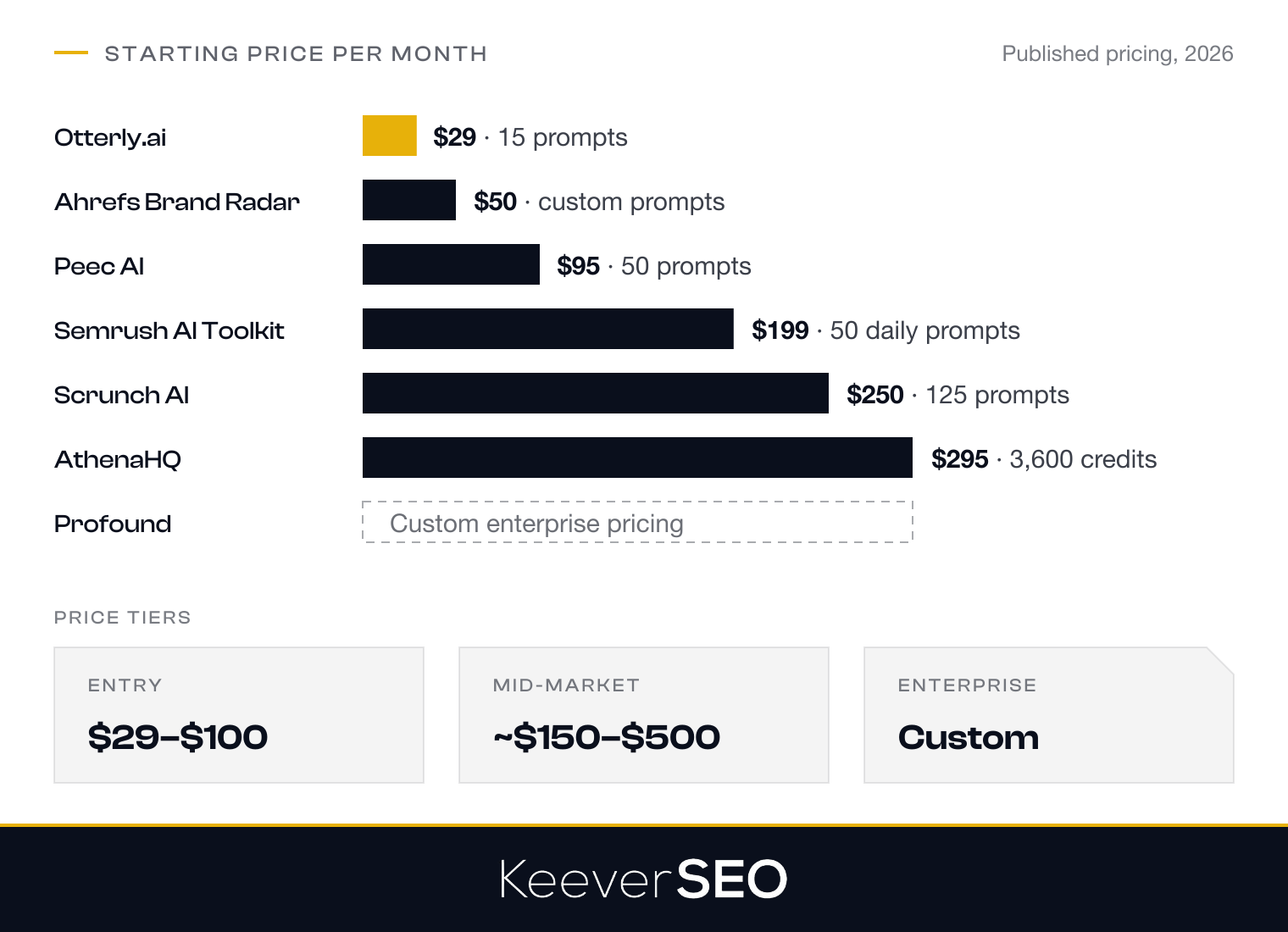
International brands and agencies can organize prompts by market, language, project, or client workspace, and Peec AI's plans include unlimited users. Peec AI's Starter plan costs $95 per month for 50 prompts and three chosen models, Pro costs $245 for 150 prompts, and Advanced costs $495 for 350 prompts, and the platform focuses on monitoring and reporting rather than content optimization.
4. Scrunch AI — Best for Tracking With Content Suggestions
Scrunch AI is the best tool for tracking with content suggestions, monitoring brand visibility across AI-generated answers, including mentions, citations, sentiment, rankings, and competitor share of voice. Marketing teams can filter results by prompts, topics, personas, funnel stages, countries, and AI platforms.
Scrunch AI suits marketing teams, agencies, and larger brands that need visibility data tied to content improvements. Its crawler reports flag access problems, crawl errors, and JavaScript barriers, while its audits and content suggestions identify pages to update, and Scrunch AI's Core plan costs $250 per month for 125 prompts, which may not suit smaller teams.
5. Otterly.ai — Best for Affordable AI Search Citation Monitoring
Otterly.ai is the best tool for affordable AI search citation monitoring, tracking brand mentions and website citations across ChatGPT, Google AI Overviews, Perplexity, and Microsoft Copilot. Otterly.ai's Lite plan is listed at $29 per month for 15 prompts, with sentiment analysis, citation-source monitoring, and competitor comparisons.
Small businesses, in-house marketers, and agencies can use Otterly.ai for recurring AI visibility checks without enterprise software. The Lite plan caps prompt volume, and Claude, Google AI Mode, and Gemini are paid add-ons, while Otterly.ai reports visibility but does not perform the content or outreach work needed to improve it.
6. LLMrefs — Best for Research-Focused LLM Citation Tracking
LLMrefs is the best tool for research-focused LLM citation tracking, expanding SEO keywords into natural-language prompts and tracking brand visibility across ChatGPT, Google AI Overviews, Gemini, Perplexity, and Claude. Its reports show brand mentions, rankings, share of voice, competitors, and cited URLs or domains.
LLMrefs suits SEO teams, agencies, and researchers connecting keyword research with AI search analysis. Citation-source reports reveal the publishers and pages that shape competitor visibility, and buyers should confirm the plan's refresh frequency and sentiment reporting against their needs.
7. Ahrefs Brand Radar — Best for Large-Scale Brand Mention Data
Ahrefs Brand Radar is the best tool for large-scale brand mention data, with an index covering "519 million real prompts." The platform analyzes mentions, citations, estimated impressions, and competitor share of voice across ChatGPT, Gemini, Perplexity, Microsoft Copilot, and Google AI Overviews.
Large marketing, SEO, and communications teams can use Brand Radar for market benchmarks and custom prompt tracking. Ahrefs lists custom prompts from $50 per month, an AI Visibility Index at $199 per month, and $699 per month for all models, and estimated share of voice does not measure actual visits or conversions.
8. Semrush AI Toolkit — Best for Teams Already Running SEO in Semrush
Semrush AI Toolkit is the best fit for teams already running SEO in Semrush, tracking brand mentions, citations, share of voice, sentiment, and prompt-level visibility across AI search platforms. Its coverage includes ChatGPT, Google AI Overviews, Google AI Mode, Gemini, and Perplexity.
SEO teams and agencies can use its AI visibility data alongside Semrush research, competitor comparisons, site audits, and content-gap recommendations. Semrush's Starter SEO + AI Search plan costs $199 per month, or $165.17 per month billed annually, with 50 prompts tracked daily, which may cap larger monitoring programs.
9. AthenaHQ — Best for Tracking Paired With Content Optimization
AthenaHQ is the best tool for tracking paired with content optimization, combining AI visibility tracking with content recommendations. The platform monitors brand mentions, citations, sentiment, and competitor visibility across ChatGPT, Perplexity, Google AI Overviews, Gemini, Claude, Copilot, and Grok, and source analysis helps teams identify pages and content gaps that affect AI citations.
AthenaHQ suits enterprise SEO, content, public relations, product marketing, and commerce teams that need measurement and optimization workflows. AthenaHQ's Starter plan costs $295 per month for 3,600 credits across 11 models, and credit-based usage can be costly for small businesses seeking basic mention tracking.
10. Google Analytics 4 — Best Free Tool for AI Referral Traffic
Google Analytics 4 is the best free tool for AI referral traffic, measuring visits from AI assistants. A custom channel group can classify referrals from ChatGPT, Gemini, Perplexity, Claude, and Microsoft Copilot, and placing the AI channel above the generic Referral channel lets GA4 assign matching visits correctly.
GA4 reports show which landing pages receive AI referrals and whether those visits lead to engagement, form submissions, or purchases. Google Analytics 4 measures website visits and conversions, but it does not track brand mentions, AI citations, or prompt-level visibility.
How Were These GEO Tracking Tools Ranked?
The GEO tracking tools were ranked by AI model coverage, tracking depth, citation and sentiment data, reporting quality, and price. Platforms earned higher rankings when they tracked relevant AI answers, identified cited sources, measured brand sentiment, and presented usable reports. Pricing comparisons considered prompt allowances, refresh frequency, tracked brands, model access, user seats, and paid add-ons. The ranking factors lead to three practical criteria for evaluating a GEO tracking tool: model coverage, run frequency, and citation plus sentiment data.
Which Criteria Should a GEO Tracking Tool Meet?
The criteria a GEO tracking tool should meet are broad model coverage, consistent prompt frequency, and detailed citation and sentiment data. Model coverage should include the AI platforms your audience uses, such as ChatGPT, Gemini, Perplexity, Claude, and Google AI Overviews. Daily or weekly prompt runs create comparable records because AI answers change between checks. Citation and sentiment data reveal which sources support brand mentions and whether AI responses describe the brand positively, neutrally, or negatively.
Which AI Models Does the Tool Track?
The AI models a GEO tracking tool should track are ChatGPT, Gemini, Perplexity, Claude, and Google AI Overviews. Coverage across those AI assistants and search results helps teams compare brand mentions and citations across major discovery platforms, which matters because the September 2026 audit "'If I Had to Buy Just ONE: Galaxy S26 Ultra': Auditing AI-Generated Product Recommendations" found that the ChatGPT and Gemini interfaces shared only 5.4% of source domains.
How Often Does the Tool Run Prompts?
A GEO tracking tool should run prompts daily or weekly, because AI answers change between runs. SparkToro's January 2026 study "NEW Research: AIs are highly inconsistent when recommending brands or products" found "a <1 in 100 chance" that ChatGPT or Google's AI returns the same list of brands in any two responses. Daily checks suit priority prompts, launches, and major content updates, while weekly runs support routine trend analysis across a consistent set of prompts and models.
Does the Tool Track Citations and Sentiment?
Yes, a GEO tracking tool should track citations and sentiment by recording cited URLs and sentiment alongside brand mentions. Cited URLs reveal which pages and sources inform AI answers, while sentiment shows whether AI systems describe a brand positively, neutrally, or negatively. Together, citation and sentiment data help teams identify content to improve and sources to earn or update.
How Does GEO Tracking Work?
GEO tracking works by running a consistent set of buyer-focused prompts across selected AI models on a daily or weekly schedule. The software records each answer and parses it for brand mentions, competitor names, cited URLs, prominence, and sentiment.
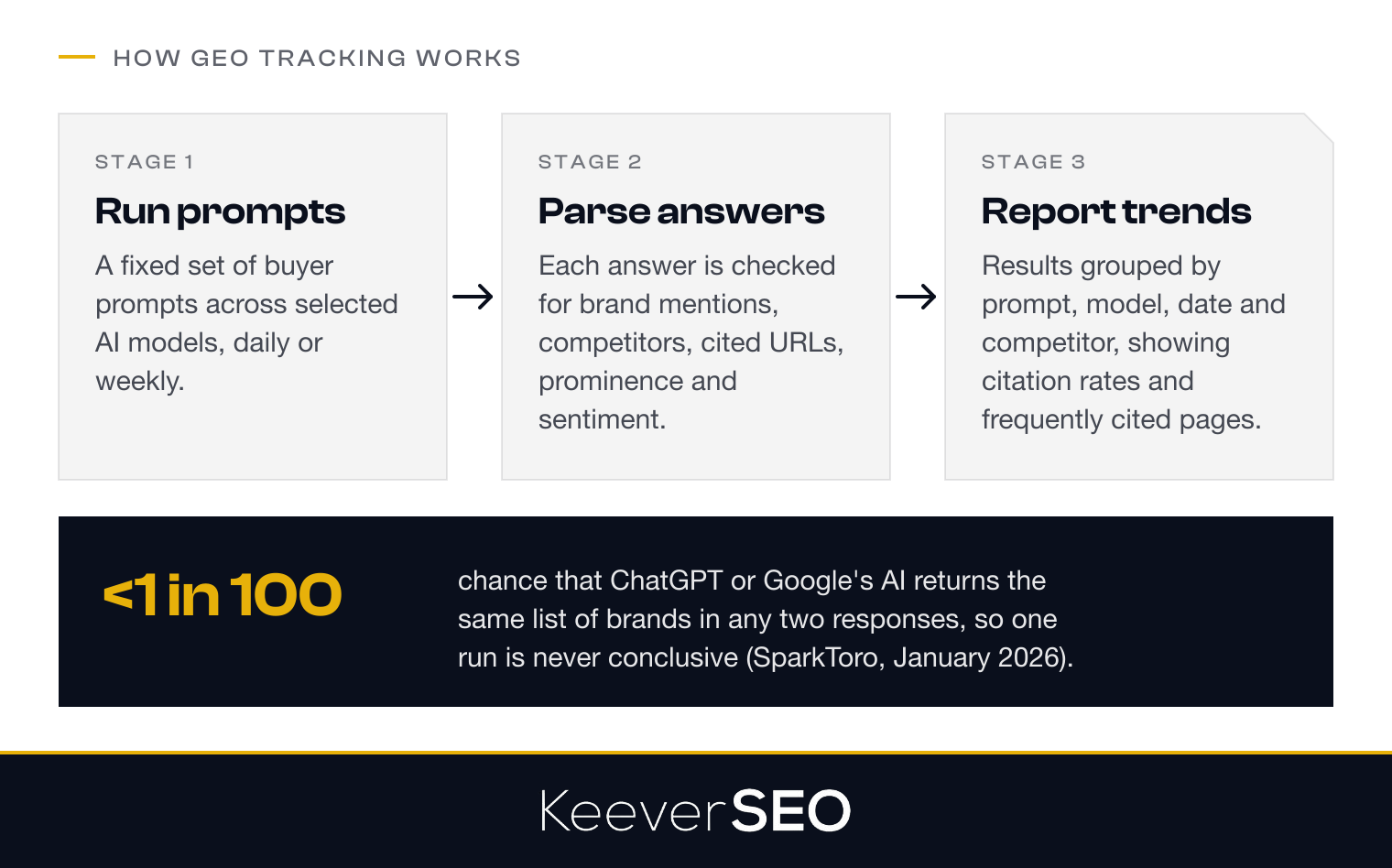
The tracking platform groups results by prompt, model, date, and competitor. Trend reports show changes in brand visibility, citation rates, and frequently cited pages, which helps teams identify content that needs attention.
How Do GEO Tracking Tools Differ From SEO Tools?
GEO tracking tools differ from SEO tools because GEO tools measure how AI answer engines respond to buyer prompts, while SEO tools track keywords in search results. GEO platforms record brand mentions, cited sources, prominence, and sentiment, and SEO platforms report page positions, impressions, clicks, and click-through rates.
AI answers change between runs, so GEO tools compare repeated prompt results over time rather than treating one response as a fixed ranking. SEO rankings fluctuate too, but keyword position remains the central measurement.
Are Free GEO Tracking Tools Enough?
No, free GEO tracking tools are not enough beyond an initial view, although free tiers and manual prompt checks suit small websites starting out. Small teams can record each prompt, model, date, location, brand mention, and cited URL to compare results over time. AI answers change between runs, so one manual check cannot establish a reliable trend, and teams that need scheduled multi-model tracking, competitor comparisons, and historical reporting need a paid GEO tracking tool.
How Much Do GEO Tracking Tools Cost?
GEO tracking tools cost $29 to $100 per month for entry plans, about $150 to $500 per month for mid-market plans, and custom rates for enterprise use. Otterly.ai lists plans at $29, $189, and $489 per month, while Peec AI lists plans at $95, $245, and $495 per month, according to each vendor's published pricing page as of October 2026. Enterprise pricing depends on prompt volume, AI model coverage, user seats, reporting features, and support.
Which GEO Tracking Tool Mistakes Should You Avoid?
The GEO tracking tool mistakes to avoid undermine the value of monitoring representative prompts and acting on consistent findings. The common tracking mistakes are listed below:
- Tracking too few prompts or using unrepresentative buyer questions.
- Treating one AI response as a final visibility result.
- Ignoring the cited URLs and domains behind AI answers.
- Collecting GEO data without updating content or addressing identified gaps.
Which GEO Tracking Tool Fits a Local Service Business?
The GEO tracking tool that fits a local service business is Otterly.ai's entry-level plan paired with Google Analytics 4. Otterly.ai's Lite plan is listed at $29 per month for 15 prompts across ChatGPT, Google AI Overviews, Perplexity, and Microsoft Copilot.
Google Analytics 4 measures whether AI referrals generate website visits and conversions. Businesses with very small budgets can begin with GA4 and manual prompt checks, while companies tracking several locations or services may need more prompts and a scalable GEO platform.
When Does a Managed GEO Service Replace a Tracking Tool?
A managed GEO service replaces a tracking tool when a team needs implementation, not visibility data alone. GEO tracking tools report brand mentions, competitor citations, and source pages, while a service interprets those findings and carries out the recommended work.
A GEO provider can update content, implement schema markup, improve technical accessibility, and strengthen brand mentions and authority signals. Businesses without in-house GEO skills or technical resources can use a managed service for ongoing optimization and reporting.
How Does Keever SEO Use GEO Tracking Tools Inside Its Generative Engine Optimization Services?
Keever SEO uses GEO tracking tools inside its generative engine optimization services as an ongoing measurement and improvement cycle. The measurement-first SEO agency team creates per-client prompt sets based on services, locations, products, and commercial goals, then tracks responses across ChatGPT, Gemini, Perplexity, Copilot, Claude, and Google AI Overviews.
Monthly reports measure brand mentions, citations, competitor visibility, sentiment, citation share, and referral traffic. Keever SEO uses those findings to update answer-focused content, schema markup, brand information, crawler access, and external mentions, then reruns prompts to compare results with the original baseline.
Which Metrics Should GEO Tracking Tools Report?
The metrics GEO tracking tools should report are mention rate, citation share, prominence, sentiment, and AI referral conversions. Mention rate measures how frequently tracked AI answers name your brand, while citation share measures how frequently AI answers link to your website or content. Prominence records where your brand appears in an answer, and sentiment shows whether AI describes your brand positively, neutrally, or negatively. AI referral conversions track visits from AI platforms that lead to purchases, sign-ups, or other desired actions.
Which AEO Tools Also Track Generative Engine Optimization?
The AEO tools that also track generative engine optimization are most answer engine optimization (AEO) tools, because both disciplines measure brand visibility in AI-generated answers. Before choosing an AEO platform, check its supported AI models and regions, prompt schedule, and competitor benchmarking. Strong tracking reports identify cited pages, distinguish owned from third-party sources, and measure sentiment and share of voice, while historical trends and exportable reports help teams assess visibility changes and plan follow-up work.
How Do Tracking Results Guide GEO Best Practices?
Tracking results guide GEO best practices by showing which content changes increase brand mentions, citation frequency, and prominence across AI answers. Comparing the same prompts over time helps teams identify pages and claims that earn citations consistently. Teams can update pages that competitors replace in cited answers, especially when content is outdated, hard to crawl, or does not directly answer the prompt. Re-running the prompt set after each major change shows whether citations, sentiment, and AI referral conversions improve.
Which GEO Tracking Tool Should You Choose in 2026?
The GEO tracking tool you should choose in 2026 depends on team size, reporting needs, and budget. Enterprise teams can choose Profound or Scrunch AI for wider visibility analysis and workflows, while mid-market teams can compare Peec AI, LLM Pulse, Otterly.ai, LLMrefs, Ahrefs Brand Radar, Semrush AI Toolkit, and AthenaHQ.
Small businesses can start with free Google Analytics 4 to measure AI referral visits and conversions, then add an affordable tracker when they need citation and mention data. The ranked list of the best tools to track generative engine optimization helps match each platform to those needs.