Answer engine optimization trends are shifts in how AI answer engines select sources, led by AI Overviews as a default-style result, zero-click answers, and citations replacing rankings as a primary visibility measure. Answer engine optimization (AEO) is the practice of making business information easy for answer engines to extract, interpret, and cite. Each AEO trend changes how businesses earn visibility across AI-generated responses.
The ten major AEO trends are AI Mode and AI Overviews expanding across Google searches, zero-click answers reducing website visits, citations and share of voice becoming core measures, conversational prompts and topics gaining ground over isolated keywords, brand mentions across trusted sources strengthening alongside backlinks, agentic search comparing, booking, and buying for users, multimodal answers drawing on images, video, and voice, PR, content, and SEO teams coordinating around shared visibility, measurement connecting AI referrals to leads and revenue, and dedicated AEO tools and services entering marketing budgets.
The trends are accelerating as users adopt conversational search and platforms build generated answers into search results. AEO represents a lasting shift because major search platforms now provide AI-generated answers, and businesses can respond by auditing AI visibility, publishing clear answers, earning credible mentions, and tracking citations and revenue. Local service businesses face changes in "near me" answers, review-based citations, and zero-click results, and businesses without in-house teams can check prompts every quarter, follow trusted industry sources, or outsource ongoing AEO work. Keever SEO responds through updated prompt sets, platform tracking, and revised content and brand-mention work, while AEO tools monitor citations, sentiment, and share of voice. The overview below introduces the biggest trends before examining each one in detail.
What Are the Biggest Answer Engine Optimization Trends?
The biggest answer engine optimization trends shift visibility from ranked links to AI-generated answers, citations, and brand mentions. The main developments are Google AI Overviews and AI Mode, zero-click results, conversational prompts, and citations and share of voice as visibility measures.
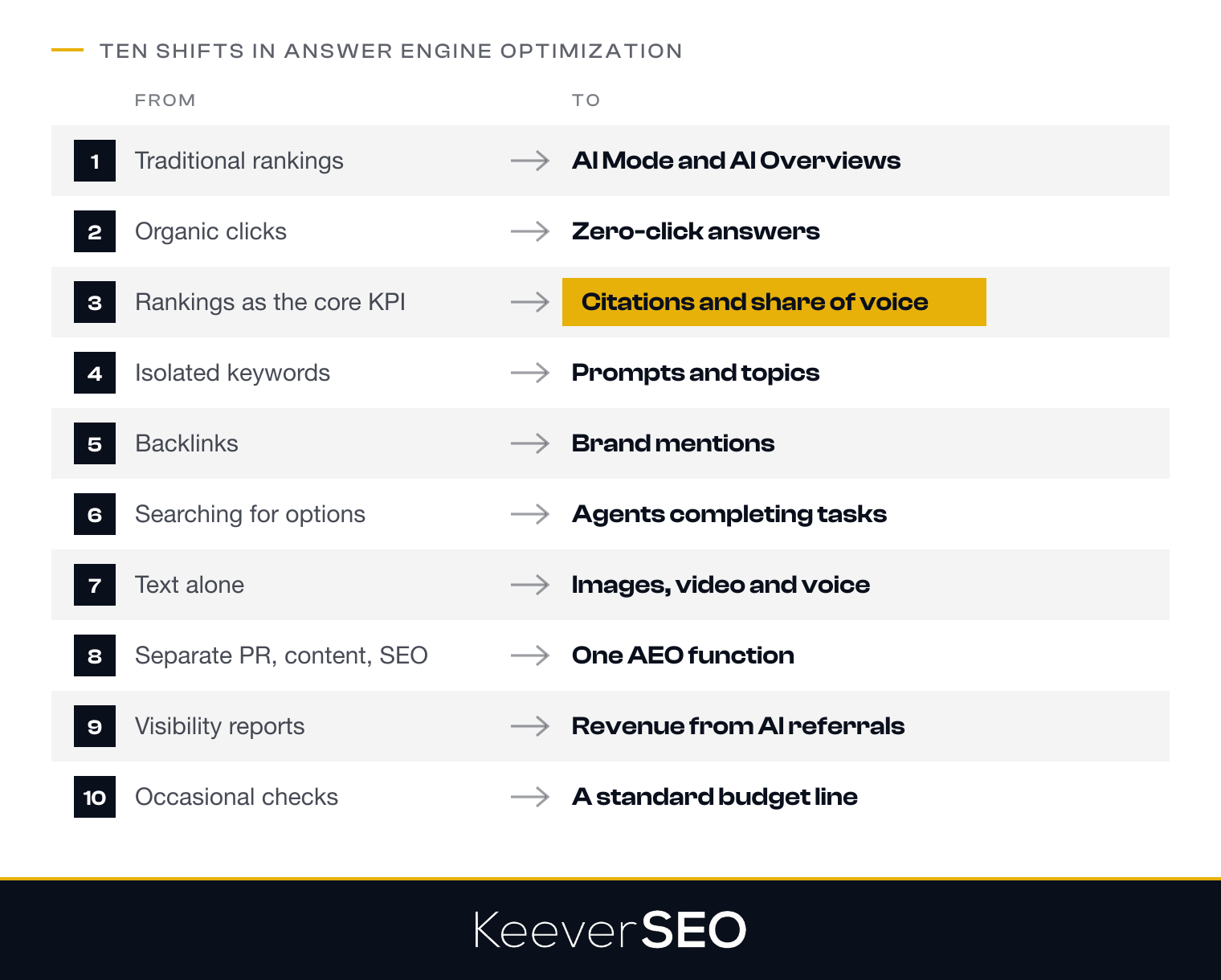
The ten trends extend to agentic search, multimodal answers, coordinated PR and SEO, revenue-based measurement, and dedicated AEO budgets. Together, the shifts make answer-focused content, credible brand references, and AI citation tracking central to optimization.
1. AI Mode and AI Overviews Becoming the Default Google Result
AI Mode and AI Overviews are becoming the default Google result as AI-generated answers expand across more Search queries. Sundar Pichai reported that "AI Overviews now has over 2 billion monthly users across more than 200 countries and territories and 40 languages" in Alphabet's Q2 2025 earnings remarks, published by Google in July 2025, and said in the Q2 2026 remarks that AI Mode had "surpassed 1 billion monthly active users." AI Mode supports follow-up questions, comparisons, and exploratory searches.
The change shifts search visibility beyond traditional rankings. Businesses now need clear, trustworthy pages that Google can interpret, select, and cite within generated answers.
2. Zero-Click Answers Replacing Organic Clicks
Zero-click answers are replacing organic clicks as search results provide information without requiring a website visit. "In the first four months of 2026, a whopping 68.01% of Google searches ended without a click," according to "In 2026, Less than One Third of Google Searches Still Send a Click" by Rand Fishkin, published by SparkToro in June 2026 using US Similarweb panel data.
Answer engine optimization responds by making useful information clear and easy to extract. Concise answers, structured details, and accurate brand information help a page appear in search summaries, even when users do not click through.
3. Citations and Share of Voice Replacing Rankings as the Core KPI
Citations and share of voice are replacing rankings as the core KPI because answer engines make citation frequency, AI share of voice, and sentiment the main measures of AEO performance. Citation frequency counts how frequently an AI answer uses a brand's website or content as a source, while a brand mention only records the brand's appearance.
AI share of voice compares a brand's mentions or citations with competitors across the same prompts and topics. Sentiment shows whether answer engines describe the brand positively, neutrally, negatively, or inaccurately, which reveals the quality of that visibility.
4. Prompts and Topics Replacing Keywords
Prompts and topics are replacing keywords because answer engine optimization now focuses on conversational prompts and complete topic coverage rather than isolated keywords. AI answer engines interpret context and intent, process longer questions, and connect related subqueries when assembling answers, and Google reports that "queries in AI Mode are on average three times longer than traditional searches" in its Q3 2026 earnings remarks.
Keywords still reveal search demand, but a single term captures only part of a user's need. Content that answers related questions about definitions, comparisons, use cases, and practical steps gives answer engines clearer information to extract and cite.
5. Brand Mentions Outweighing Backlinks
Brand mentions are outweighing backlinks as an answer engine optimization signal because AI systems identify relevant companies across trusted sources. A 2025 Ahrefs study of 75,000 brands, "An Analysis of AI Overview Brand Visibility Factors" by Louise Linehan, found that "web mentions (0.664) correlate much more strongly than backlinks (0.218)" with AI Overview brand visibility. Repeated, accurate references in reviews, comparison pages, industry publications, directories, and community discussions strengthen a brand's visibility beyond its own website.
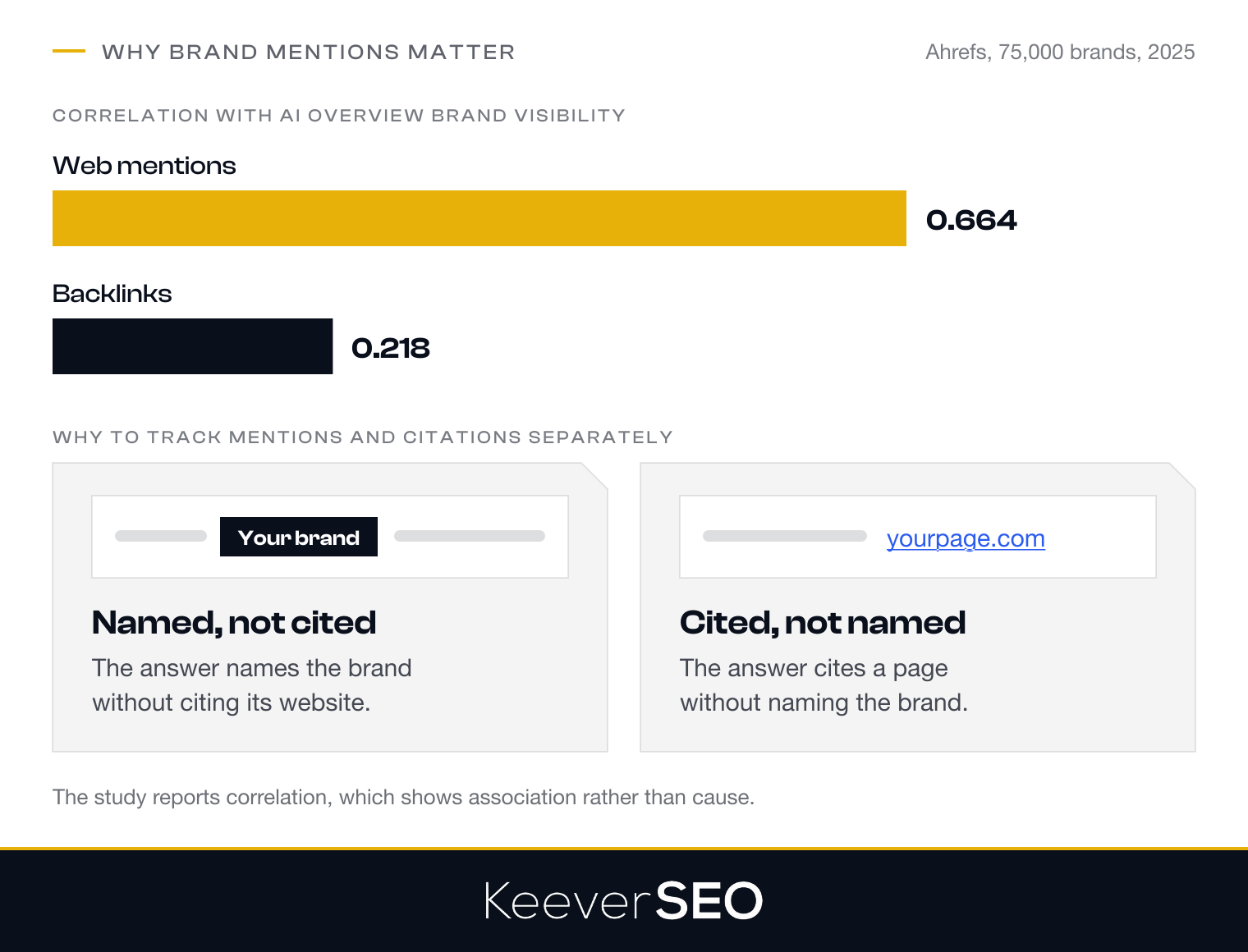
Businesses should track both brand mentions and citations, because an AI answer can name a brand without citing its website, or cite a page without naming the brand.
6. Agentic Search Completing Tasks for Users
Agentic search completes tasks for users by having AI agents compare options, fill out forms, book services, and help complete purchases. Search visibility increasingly depends on whether an agent can read a business's offers and complete tasks through its website.
Businesses can prepare agent-ready websites by keeping pricing, availability, service details, and policies accurate. Clear structured data, accessible page layouts, and secure, easy-to-use booking or checkout flows help agents use business websites reliably.
7. Multimodal Answers From Images, Video, and Voice
Multimodal answers from images, video, and voice use more than text to interpret questions and generate responses. Google reports that "one in five AI Mode searches globally use voice, images, or documents" and that visual search has "crossed over 50 billion visual searches per month," according to its Q3 2026 earnings remarks, published in October 2026.
Answer engine optimization for multimodal search requires useful visual and spoken content alongside text. Clear images, descriptive filenames, accurate alt text, instructional videos, transcripts, and product demonstrations help answer engines interpret and cite relevant information.
8. PR, Content, and SEO Teams Merging Into One AEO Function
PR, content, and SEO teams are merging into one AEO function because earned media, owned content, and technical optimization support one goal: helping answer engines find, interpret, and cite a brand. SEO structures information for retrieval, content provides clear answers and evidence, and PR builds authority through media coverage, expert commentary, and trusted third-party mentions.
An integrated AEO function keeps brand information consistent across company websites, publications, and social channels. Teams can assess their combined visibility through citation frequency, share of voice, and brand sentiment, alongside traditional rankings and media coverage.
9. AEO Measurement Moving From Visibility to Revenue
AEO measurement is moving from visibility to revenue as reporting shifts from citation counts and share of voice to leads, sales, and revenue attributed to AI referrals. Businesses can connect identifiable visits from ChatGPT, Perplexity, Gemini, and other answer engines with form submissions, purchases, pipeline stages, and closed deals through analytics and CRM systems.
Referral tracking alone cannot capture the full influence of AEO, because many users act on AI answers without clicking a source. Reports should separate directly attributed conversions from assisted conversions, branded-search growth, and self-reported discovery, and distinguish observed revenue from estimated impact.
10. AEO Tools and Agencies Becoming a Standard Budget Line
AEO tools and agencies are becoming a standard budget line as businesses track brand visibility in AI answers. Dedicated platforms monitor prompts, citations, competitors, and share of voice across ChatGPT, Google AI Overviews, Perplexity, and Gemini. Published prices start at $29 per month for Otterly.AI's entry plan and reach several hundred dollars per month for advanced platforms, and agency retainers can cost several thousand dollars per month.
AEO agencies support ongoing prompt testing, content updates, digital PR, and performance reporting, then adjust optimization work as results change.
Why Are Answer Engine Optimization Trends Accelerating Now?
Answer engine optimization trends are accelerating because people ask longer questions and expect direct, conversational answers. Faster AI model updates expand those capabilities, while Google and other search platforms place generated answers directly in search results. Google said in its Q3 2026 earnings remarks that its "year-over-year query growth rate is the highest it's been in the last five years."
Search behavior, model development, and platform integration reinforce each other. The next section examines how quickly people are adopting AI search and assistants.
How Fast Is AI Search Adoption Growing?
AI search adoption is growing quickly across chatbots and search platforms. OpenAI reported "more than 1 billion weekly active users" for ChatGPT in "A milestone in expanding access to AI," published in August 2026, and Google reported that "the Gemini app is now at one billion users" in its Q3 2026 earnings remarks. Similarweb data shows that average monthly web visits across generative AI platforms "grew 70% year-over-year, reaching 9.5 billion between June 2025 and May 2026," according to "AI Search Stats 2026: Market Share, Referral, and Citation Data," published in July 2026.
Is Answer Engine Optimization a Lasting Shift or a Passing Trend?
Answer engine optimization is a lasting shift, not a passing trend, because major search platforms now integrate AI-generated answers into search results. Google provides AI Overviews and AI Mode, while Bing offers generative search features. Traditional SEO remains relevant, but businesses must now optimize for inclusion and citations in generated answers.
How Should Businesses Respond to AEO Trends?
Businesses should respond to AEO trends by tracking AI visibility, measuring citations, coordinating teams, and reviewing results every quarter. The main responses to AEO trends are listed below:
- Audit brand visibility across major answer engines using relevant customer prompts.
- Track citations, mentions, share of voice, and qualified leads from AI referrals.
- Coordinate PR and content teams around consistent topics and accurate brand information.
- Review prompt results each quarter and update content and outreach priorities.
Which AEO Trends Affect Local Service Businesses Most?
The AEO trends that affect local service businesses most are AI answers for "near me" searches, customer reviews, and zero-click results. Search engines and AI assistants draw local recommendations from business profiles, maps, websites, directories, and public reviews.
Recent, detailed reviews describe a business's services and customer experience. Accurate hours, locations, contact details, and service information raise the chance that AI answers present a business, even when searchers do not visit its website.
How Can a Business Keep Up With AEO Trends Without an In-House Team?
A business can keep up with AEO trends without an in-house team by checking priority customer prompts every quarter across major AI platforms. Track brand mentions, cited pages, competitor visibility, and the accuracy of answers about the business's services.
Businesses can maintain a short list of trusted trade publications, professional organizations, local directories, and review platforms. An SEO or content partner can manage ongoing prompt monitoring, answer-focused content, credible brand mentions, and citation reporting.
How Does Keever SEO Adapt Answer Engine Optimization to New AEO Trends?
Keever SEO adjusts answer engine optimization to new AEO trends through recurring prompt tests and per-platform visibility tracking. The AI-ready SEO agency team monitors priority prompts across ChatGPT, Perplexity, Gemini, and Google AI Overviews, recording brand mentions, citations, sourced links, competitors, and share of voice.
Keever SEO updates prompt sets as user searches and platform answers change. The team revises answer-first content, headings, schema markup, entity signals, and external brand-mention work based on citation patterns, then uses citation frequency, sentiment, and AI referral traffic to guide ongoing decisions.
How Are AEO Trends Changing Each Search Platform?
AEO trends are changing each search platform in different ways across Google and standalone AI search tools. Google integrates AI Overviews and AI Mode into Search, which changes how users encounter answers and how websites earn visibility and traffic. ChatGPT and Perplexity center on conversational responses, follow-up prompts, and cited sources. The sections below examine Google's traffic effects, the wider shift from ranked links to generated answers, and the current market-share split.
How Is Google AI Overviews Changing Web Traffic?
Google AI Overviews is changing web traffic by reducing clicks to traditional organic results, especially for pages not cited in the generated answer. Pew Research Center found that users clicked a traditional result in 8% of visits when an AI summary appeared, compared with 15% without one, and clicked links inside the summary in 1% of visits, according to "Google users are less likely to click on links when an AI summary appears in the results" by Athena Chapekis and Anna Lieb, July 2025. Cited pages gain relative visibility, but citations do not necessarily restore traffic to pre-Overview levels.
How Is AI Changing Search as a Whole?
AI is changing search as a whole from a ranked list of links into a system that generates answers from multiple sources. Google AI Overviews, AI Mode, and tools such as ChatGPT and Perplexity summarize information and provide citations, while traditional search results remain available.
How Do AI Search Engines Split Market Share Today?
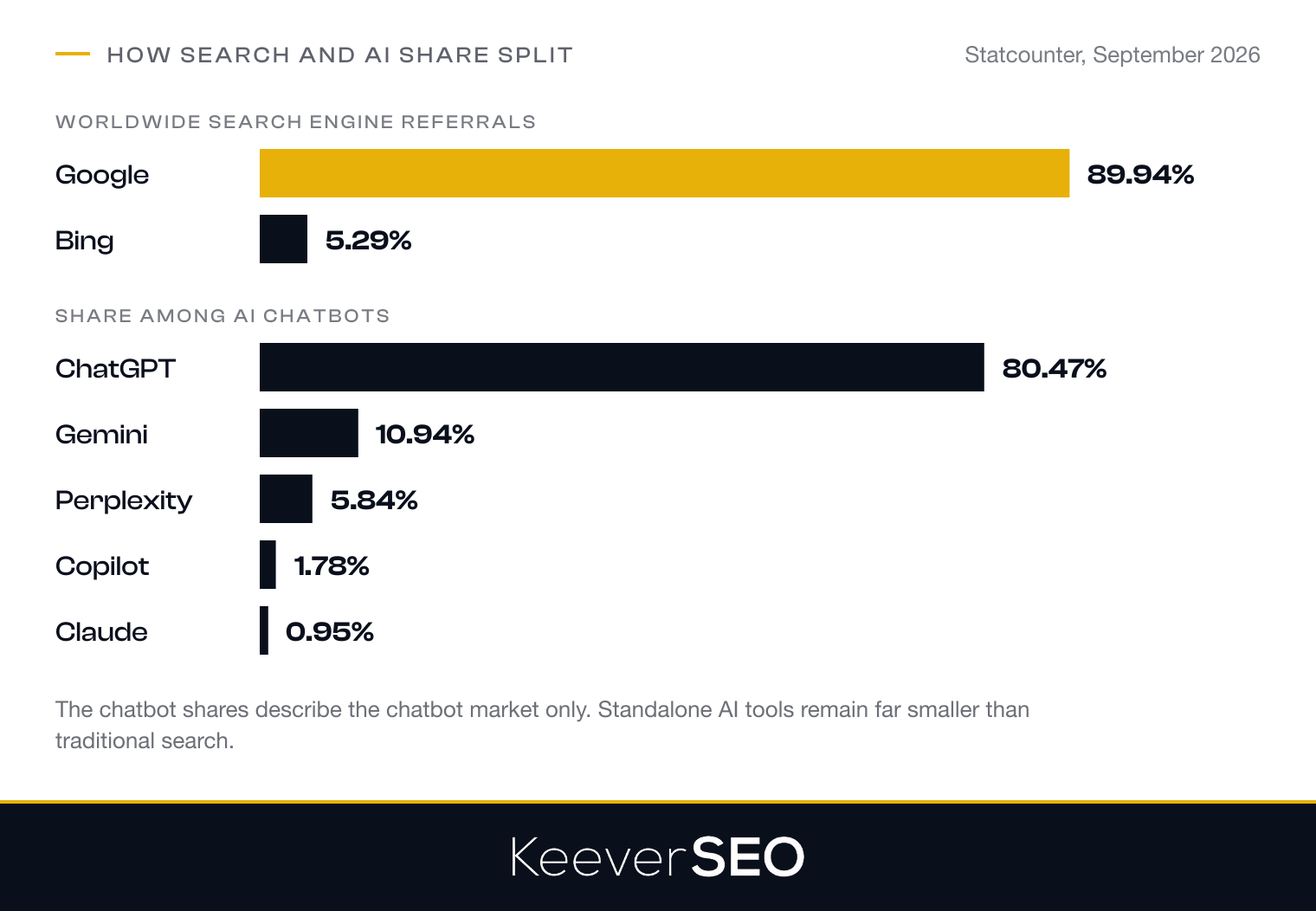
AI search engines split market share today around a dominant Google, which held 89.94% of worldwide search engine referrals in September 2026, while Bing held 5.29%, according to Statcounter Global Stats. Among AI chatbots, Statcounter's September 2026 data gives ChatGPT 80.47%, Google Gemini 10.94%, Perplexity 5.84%, Microsoft Copilot 1.78%, and Claude 0.95%. Standalone AI tools remain far smaller than traditional search, so AI answers are changing search without displacing traditional engines at comparable scale.
Which AEO Strategies Match Where the Trends Are Heading?
The AEO strategies that match where the trends are heading are earned brand mentions, answer-first content, and citation tracking. Businesses can earn mentions through credible coverage on authoritative third-party sites and publish clear pages that answer conversational questions directly. Citation tracking measures which prompts surface a brand, whether answer engines cite its pages, and how frequently the brand appears compared with competitors.
Which AEO Tools Track the Shift to AI Answers?
The AEO tools that track the shift to AI answers are AI visibility platforms that run prompts across answer engines and report brand mentions, citations, sentiment, competitor presence, and share of voice. Tools such as Semrush AI Visibility, Ahrefs Brand Radar, Profound, Otterly.AI, and Peec AI show cited sources and visibility changes over time.
Which Answer Engine Optimization Trend Should Shape Your 2026 Search Plan?
The answer engine optimization trend that should shape your 2026 search plan is the rise of citations and brand mentions, because answer engines use both to surface and identify trusted sources. Businesses should publish clear, answer-focused content and earn credible mentions across trusted sources.
Rankings and backlinks still matter, while citations and brand mentions strengthen a strategy that responds to the wider set of answer engine optimization trends.